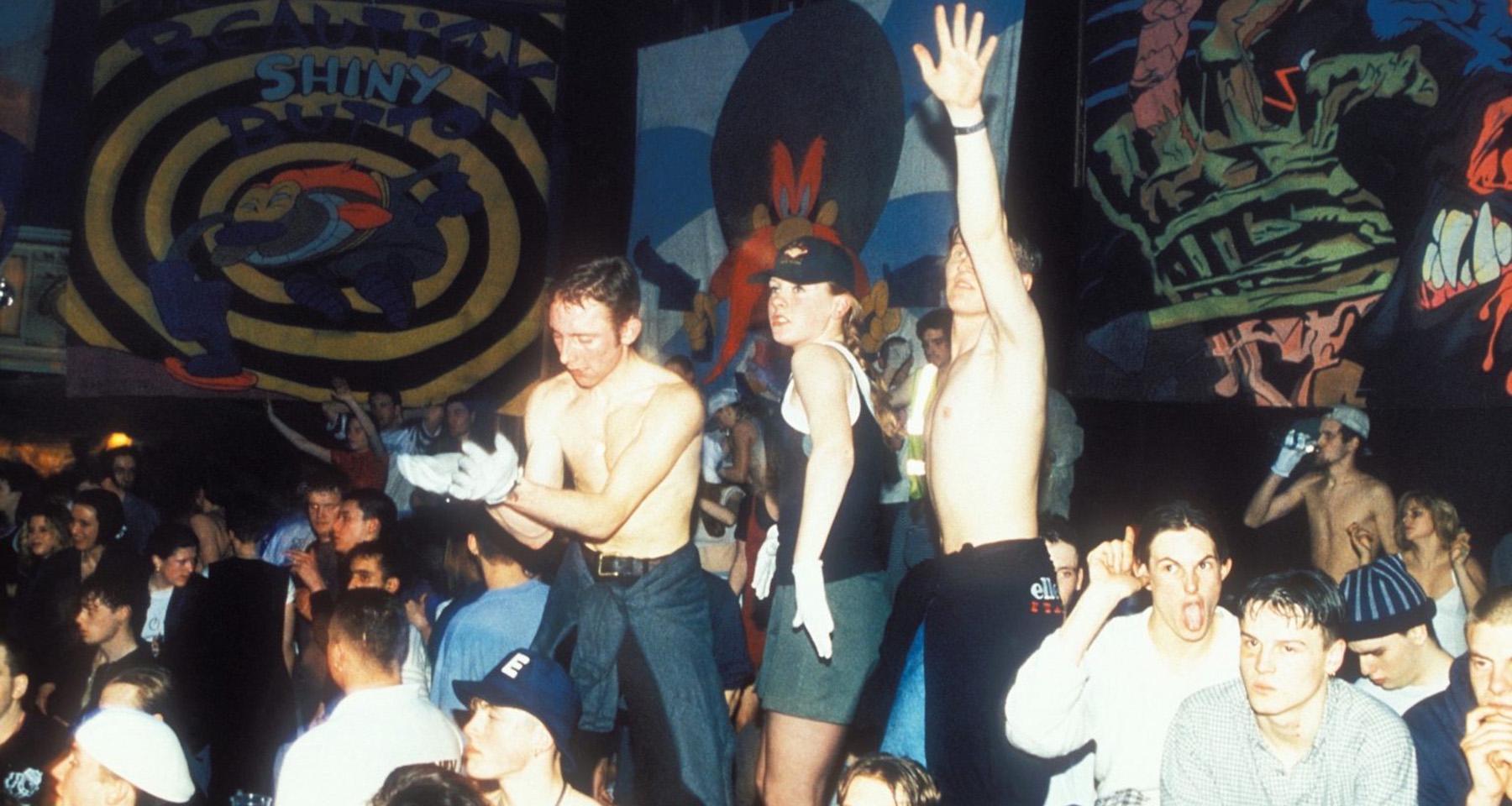
Before acid house swallowed Britain whole, Manchester was a city dressed in grey.
Then someone slipped a pill into the punchbowl – and everything changed.
There’s a version of Manchester that belongs to Joy Division: cold, post-industrial, beautiful in its despair. Ian Curtis singing about disorder while a city came apart at the seams. The Smiths retreating into Morrissey’s melancholic wit. The Fall being relentlessly, purposefully difficult. This was Manchester through the early-to-mid ’80s – brilliant, but heavy as rain.
And then something happened. Something chemical.
The City Before the Storm
To understand what Madchester became, you have to understand what Manchester was before it. The city had a long tradition of DIY culture, independent labels, and artists who didn’t care much for what London thought. Factory Records – founded by Tony Wilson in 1978 – embodied this perfectly. Wilson, famously, once signed his artists’ contracts in his own blood. The label released Joy Division, New Order, and a string of records that defined what “alternative” meant in Britain.
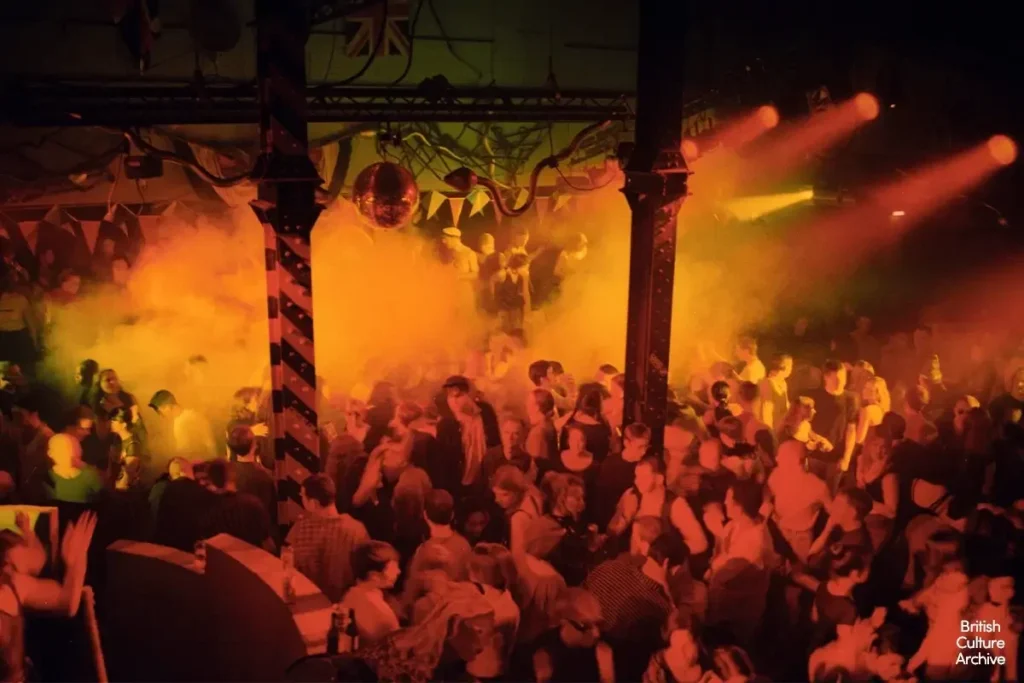
But Manchester also had the Haçienda. Opened in 1982 and co-funded by New Order, it was designed by architect Ben Kelly with input from artist Peter Saville – all raw steel girders, hazard-stripe bollards, and industrial scale. It looked like a building site dressed up for a party. It was. And for most of the early 1980s, it nearly bankrupted everyone involved. Crowds were thin, vibe was uncertain, bar takings barely covered the heating bill.

Then came the pills.
The Ecstasy Explosion
How MDMA rewired an entire music scene
MDMA – 3,4-methylenedioxy-methamphetamine, better known as ecstasy – wasn’t new to the ’80s. It had been synthesised in 1912 and briefly explored as a therapeutic tool in the 1970s. But it arrived on the British club scene in the mid-1980s like a cultural wrecking ball, brought back by holidaymakers from Ibiza where Alfredo Fiorito was already spinning all-night sessions at Amnesia to crowds blissed out on the stuff.
The drug did something very specific to music: it dissolved genre loyalty. On ecstasy, the divisions between rock fans, soul fans, and dance fans simply evaporated. What mattered was the rhythm, the bass, the collective physical experience of moving together in a dark room. It turned nightclubs – previously somewhat transactional spaces – into what many people genuinely described as religious experiences.
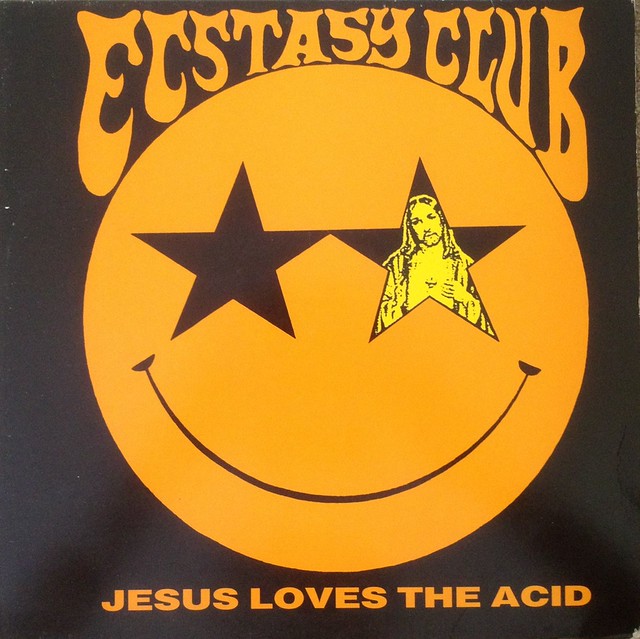
By 1987-88, the Haçienda had figured this out. DJ Mike Pickering and Graeme Park began programming acid house nights – particularly the legendary Hot nights – and suddenly the half-empty warehouse was dangerously overcrowded. New Order’s backing had essentially funded a venue that was now the beating heart of British youth culture. The irony was not lost on anyone.
“It was the best of times, it was the worst of times.
The Haçienda probably made more money for drug dealers than it ever did for us.”
– Peter Hook, New Order, on the Haçienda years
The acid house sound that filled the Haçienda had come up from Chicago – Roland TB-303 basslines squelching over four-on-the-floor kicks, named “acid” for its corrosive, lysergic feel. But Manchester’s contribution was to hybridise it with guitar bands. This was the chemical reaction that produced Madchester: what happened when indie kids started taking pills and dance music started growing hair.
The Sound of a Scene
Bands, basslines, and baggy jeans
 The Happy Mondays were the perfect avatar of this collision. Shaun Ryder’s lyrics were chaotic word-association poetry, Bez (a man whose sole job description was to dance onstage and hold maracas) became an unlikely rock star, and the band made records that moved between funk, rock, and house without ever fully committing to any of them. Their 1988 album Bummed, produced by Martin Hannett’s former collaborator, is one of the most disorienting and brilliant records of the era.
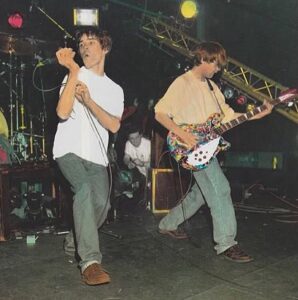
The Stone Roses approached it from the guitar side – jangly, psychedelic, soaked in ’60s influence – but produced records that the same generation of ecstasy-taking youth claimed with equal fervour. Their 1989 self-titled debut remains one of the best British albums ever made. It hovered between rock and dance in a way that felt completely natural, driven by John Squire’s flowing guitar and Mani’s deeply funky bass playing.
808 State, Inspiral Carpets, the Charlatans, and James all circled the same sun. Factory Records was the nucleus; the Haçienda was the particle accelerator. By 1989, a music journalist coined the term “Madchester” – half-celebration, half-mockery – and it stuck. NME put the scene on its cover repeatedly. The baggy silhouette (wide jeans, bucket hats, oversized hoodies) became the default uniform of an entire British youth culture.
The Birth of Rave Culture
From club nights to fields, and the Summer of Love
What ecstasy did inside clubs, it began doing outside them too. The Haçienda was the cathedral, but it couldn’t hold everyone. And besides, the police were watching. What happened next was one of the strangest episodes in British social history: thousands of young people began congregating in fields.
 The Summer of Love – 1988 – is the foundational myth. Warehouse parties in London’s then orbital motorway zones, actual fields across Britain. Pirate radio stations broadcast the locations. Phone trees spread the word. Kids drove through the night following flyers for parties they didn’t have addresses for, tuning into signals that kept moving frequency. It was, by any measure, completely insane. It was also completely joyful.
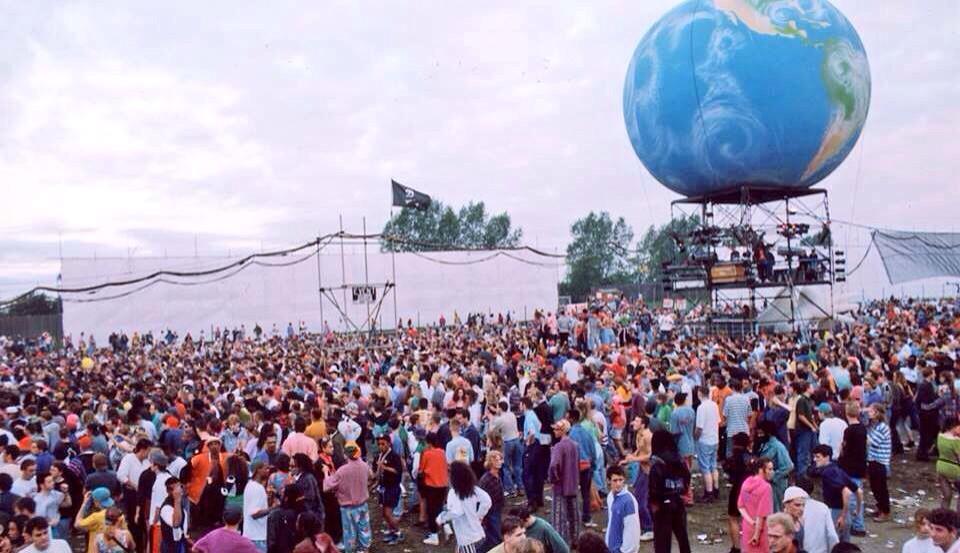
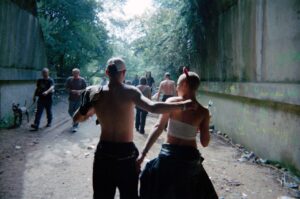 Promoters like Sunrise, Energy, and Biology were throwing events for 10,000, 20,000, even 25,000 people. The music – acid house giving way to hardcore, then to the early forms of what would become jungle, gabber, and eventually drum & bass – was secondary to the experience. Being there was the point. The collective surrender to a beat, in a field, with strangers, at 4am. The rave wasn’t just a party. It was a social movement dressed up in flashing lights.
The Crackdown
The government versus 160 beats per minute
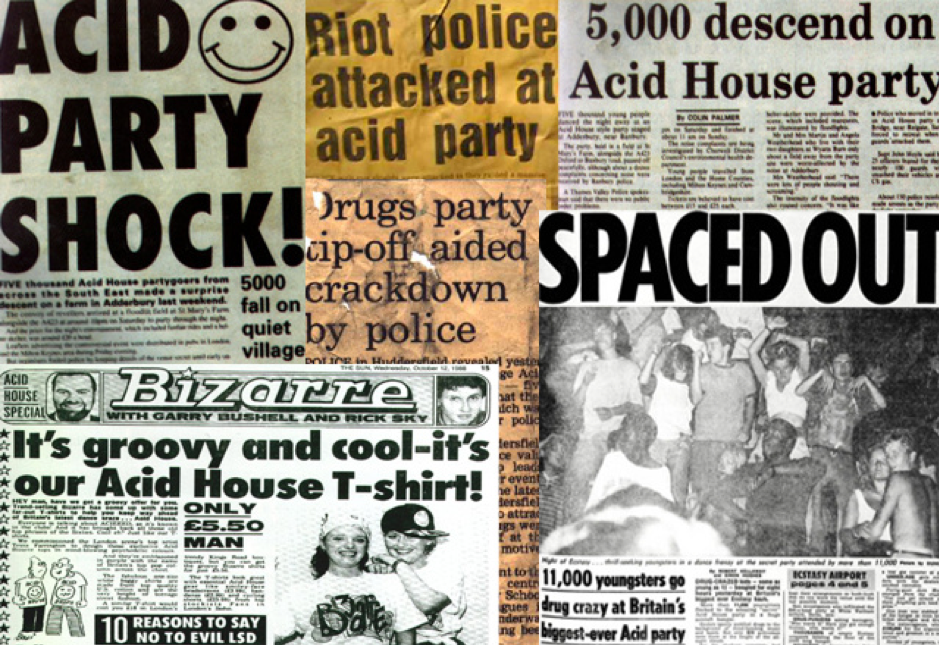
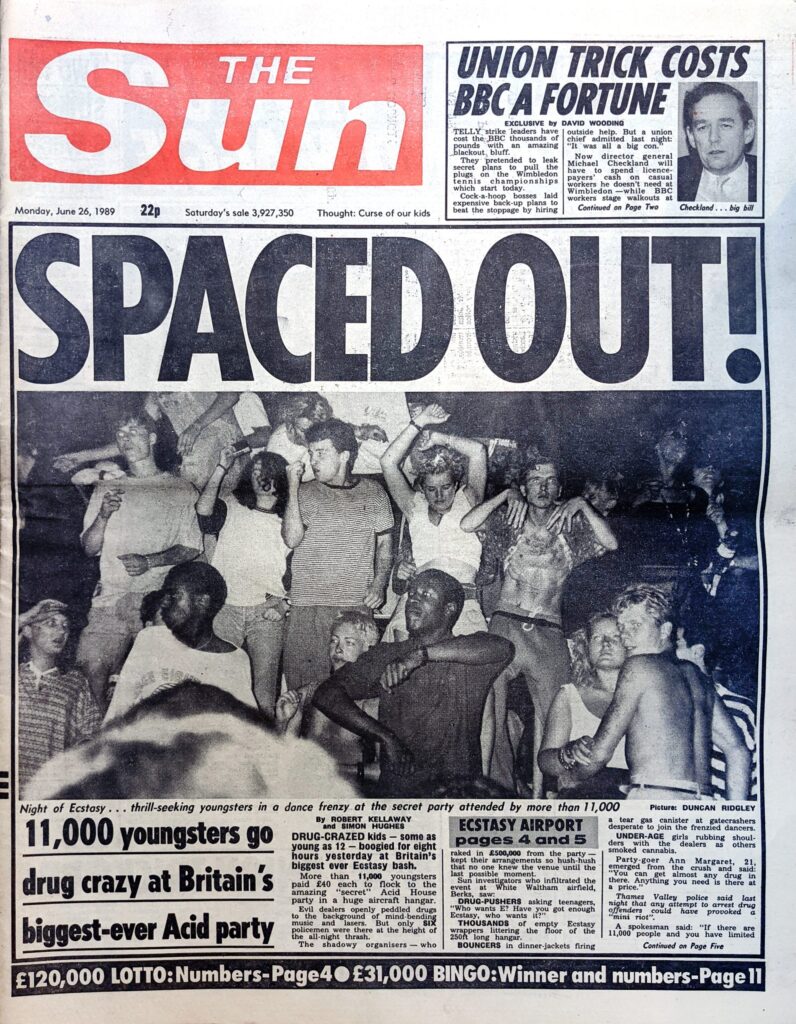
Britain’s establishment, predictably, panicked. The tabloids ran saturation coverage – Evil of the Acid House screamed the Sun in 1988, a headline that accidentally made a million teenagers want to go to a rave. Police operations escalated. Convoy interceptions on motorways. Landowners granted injunctions.
But the real killing blow came with the Criminal Justice and Public Order Act 1994, a piece of legislation so specific in its cultural targeting that it’s almost comic in retrospect. The Act literally criminalised music – defining rave music as “sounds wholly or predominantly characterised by the emission of a succession of repetitive beats.” It empowered police to disperse outdoor gatherings of 100 or more people playing such music. It criminalised trespass. It was, in short, a law written to stop young people dancing in fields.
“The repetitive beats clause was extraordinary.
Parliament essentially put a BPM into a criminal statute.”
— Legal commentary on the Criminal Justice Act 1994
The response from ravers was a protest march of around 50,000 people through London in 1994 – reportedly one of the largest youth protests in British history. It changed nothing legislatively, but it made clear that rave culture had become something more than music. It was an identity. A politics, even.
The Death of the Scene
And what came after the party
The rave scene didn’t die in a single moment. It dispersed, mutated, went underground, went legal. The energy that had been in fields moved into superclubs – Ministry of Sound (opened 1991), Cream in Liverpool, Renaissance in Nottingham. The music splintered into a thousand subgenres. Jungle and drum & bass came out of the hardcore continuum. Garage gave way, eventually, to grime. The underground never really stopped; it just changed postcode.
Madchester specifically fell apart faster and more dramatically. Factory Records went bankrupt in November 1992. The proximate cause was Happy Mondays’ catastrophic final album sessions in Barbados – the band ran up production costs of around £400,000, consumed approximately all the drugs on the island, and delivered an album (Yes Please!) that neither critics nor fans could quite bring themselves to love. Wilson, to his credit, never blamed them publicly. He blamed himself for funding it.
The Stone Roses’ implosion was more legal than chemical. Trapped in a label dispute with Silvertone Records, they spent years unable to release music while the world moved on. When they finally emerged with Second Coming in 1994, Britpop was already eating the oxygen. Oasis, crucially – had inherited the city’s guitar-band energy and stripped out the dance element entirely. Grunge from America, shoegaze from the south of England, Blur from London: the UK music press had new obsessions.
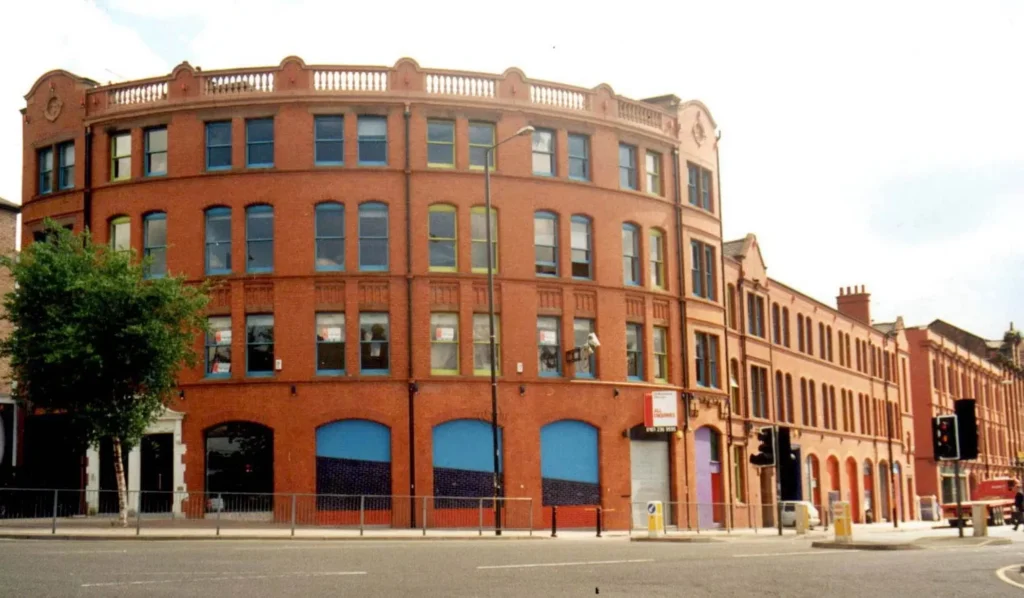
The Haçienda itself closed in 1997. The building was demolished and turned into luxury apartments. The developers, with a certain dark wit, named the development Haçienda Apartments. Bricks from the original walls were sold as collectables. Peter Hook still sells them.
Why It Still Matters
The Madchester scene lasted, in its purest form, roughly four years. That’s nothing. It’s shorter than most bands’ careers, shorter than a government term, shorter than the gap between Stone Roses albums. And yet its influence runs through almost everything that followed.
The idea that guitars and electronic music could coexist – that a band could make you dance and feel – became the template for Britpop, for the mid-2000s indie-dance explosion (Franz Ferdinand, LCD Soundsystem), for the entire career of Damon Albarn, for much of what gets called “indie” today. The rave scene’s emphasis on collective experience, anonymity of the DJ, music-as-community rather than music-as-product: all of that flows through to contemporary dance music culture globally.
Manchester went from a city synonymous with post-industrial decline and gothic introspection to one of the most musically significant places on earth – and it did it in about five years, mostly by accident, largely because of chemistry, and partly because Tony Wilson was willing to sign contracts in blood. That’s quite a story.
Madchester was always going to be temporary. The best scenes usually are. They burn bright because they’re sustained by a particular convergence – the right music, the right drugs, the right venue, the right moment – and when any one element shifts, the whole thing tips over. What Madchester left behind wasn’t a scene. It was a permission slip. Permission to mix your influences shamelessly. Permission to make people dance and feel at the same time. Permission to build something brilliant in a city that everyone else had written off.
The pills wore off. The music didn’t.